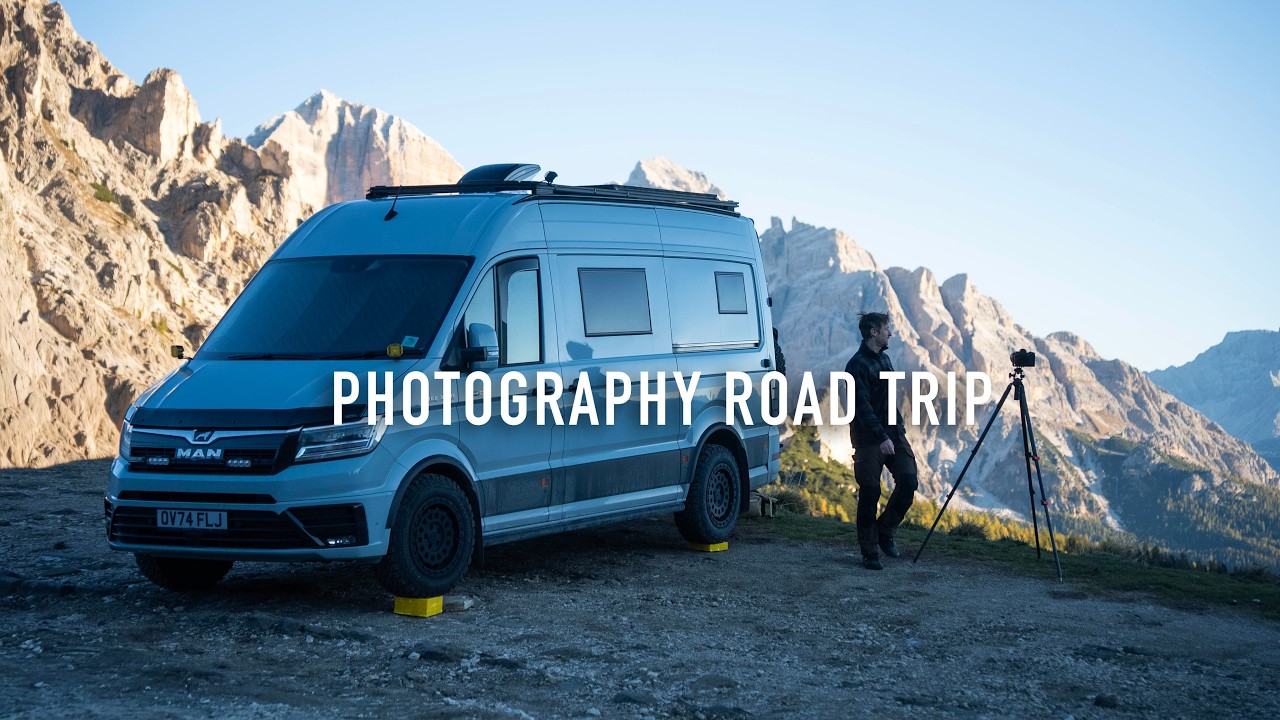
I have a bad habit of treating ambitious creative projects like fine wine. I’ll let them sit. Tell myself I’m waiting for the right moment, the right budget, the right alignment of Mercury and Jupiter. Meanwhile, the shot I wanted to take three years ago is still on a sticky note on my monitor. Sound familiar? Watch the full tutorial on YouTube
In this Thomas Heaton video, the UK-based landscape photographer does something most of us just talk about. He loads up a van, books a Eurotunnel crossing, and drives from northeast England all the way to the Dolomites in northern Italy – with almost zero pre-planning – for an autumn photography road trip. No rigid itinerary. No location scouted six months in advance. Just cameras, a guidebook, and a decision to stop saying “someday.” And watching it actually taught me a few concrete things about how working photographers approach spontaneous location work.
This isn’t a Photoshop technique breakdown. It’s something arguably more useful: a blueprint for how to actually get yourself in front of the shot instead of endlessly preparing to prepare. Here’s how Heaton does it, step by step.
Step 1: Commit Before You’re Ready
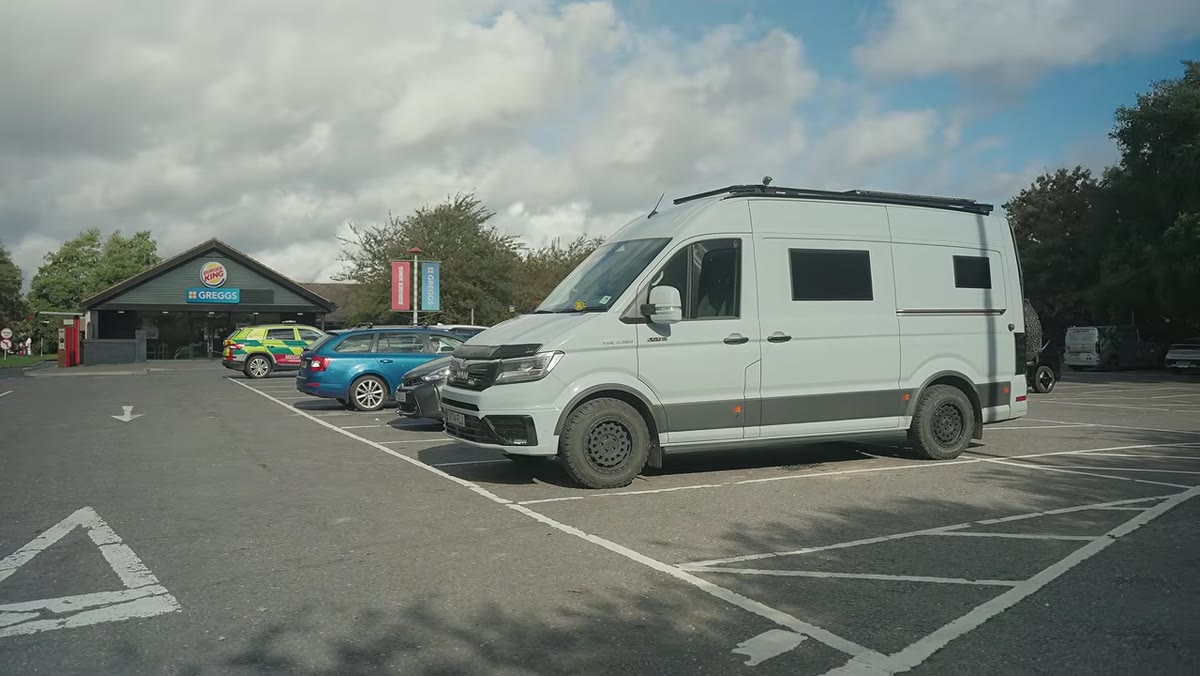 Thomas filming himself at a random UK motorway service station
Heaton opens the video at a random petrol station somewhere in the middle of England. He doesn’t know exactly where he is. He’s heading to the Eurotunnel. That’s the whole plan at this stage. The gear is packed – multiple cameras, everything organized in the back of the van – but the creative plan is basically a blank page.
This is the step most people skip entirely because it feels irresponsible. It’s not. Committing to the trip before you have every detail locked down is what forces the rest of the planning to actually happen. If you wait until everything is figured out, you never leave.
Step 2: Use Transit Time as Research Time
 Van loaded onto the Eurotunnel shuttle train
Once Heaton boards the Eurotunnel – driving his van directly onto the train, which runs under the English Channel to France – he’s in a weird in-between state. Not quite traveling, not quite working. He uses it. By the time he’s parked up for the night near a canal in Belgium, he’s pulled out a dedicated Dolomites photography guidebook and started cross-referencing it with online research.
The move here is deliberate: he uses the dead time of transit to front-load his location research. He’s not scrolling Instagram for inspo. He’s identifying specific spots, assessing what to shoot and what to skip, and building a rough mental map before he’s even close to the destination. If you’re flying somewhere for a shoot, the flight is your research window. Use it.
Step 3: Let the Guidebook Do the Heavy Lifting First
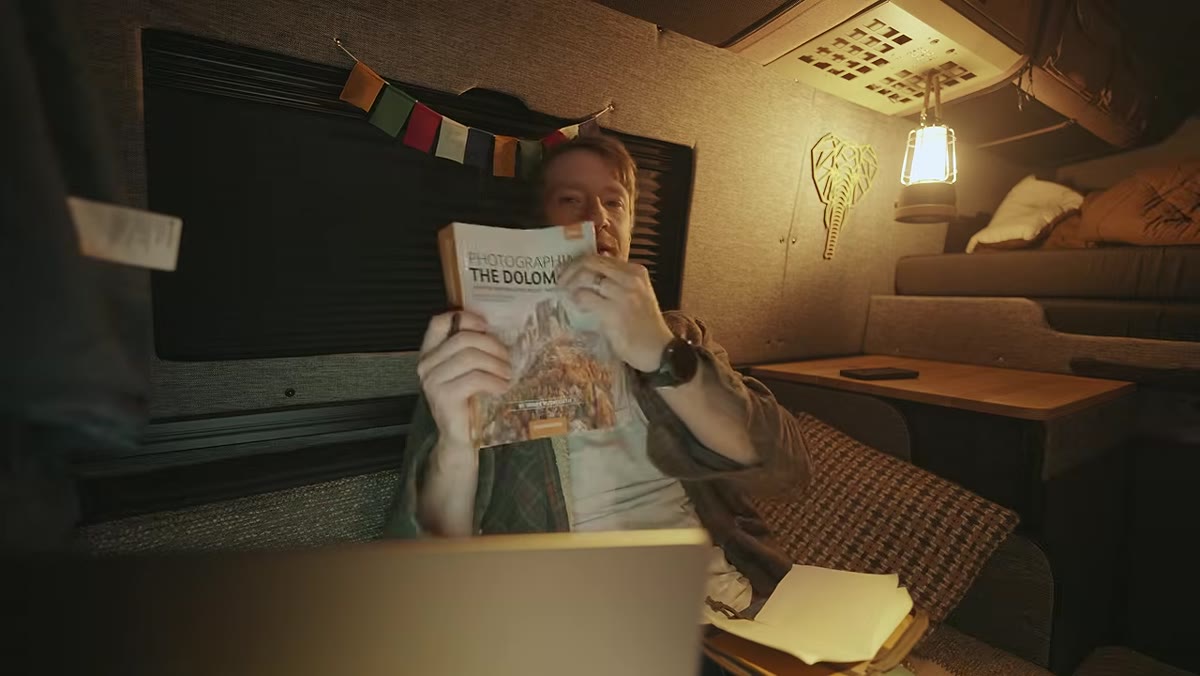 Heaton reviewing a Dolomites photography guidebook in the van
Heaton specifically mentions having a detailed Dolomites photo guide – the kind that goes beyond “go here at golden hour” and actually breaks down access, seasonal conditions, and composition considerations. He treats this as his primary planning tool, not a supplement.
If you’re heading somewhere new, a purpose-built photography guidebook is worth every penny. It compresses years of local knowledge into something you can absorb in one evening. Heaton pairs it with internet research, but the book gives him the bones of a plan. Google image searching a location tells you what it looks like. A good guidebook tells you where to stand, when to go, and what you’ll regret missing.
Step 4: Map the Full Journey Honestly
 Overhead map showing the route from northeast England to the Dolomites
Heaton pulls up a map and walks through the actual distance covered – starting northeast of Newcastle, driving south through the UK, crossing into France via the tunnel, and overnighting in Belgium. He acknowledges the second day of driving will be just as brutal, pushing through toward Austria and into Italy.
This matters because photographers routinely underestimate travel fatigue. When you’re exhausted from two days of highway driving, your creative instincts are blunted. Heaton’s honest about the grind, which is why he’s building research and mental preparation into the drive itself rather than leaving it all for when he arrives. Map your route. Know your hard days. Plan lighter shooting schedules on arrival days.
Step 5: Embrace the Spontaneous Decision as a Creative Reset
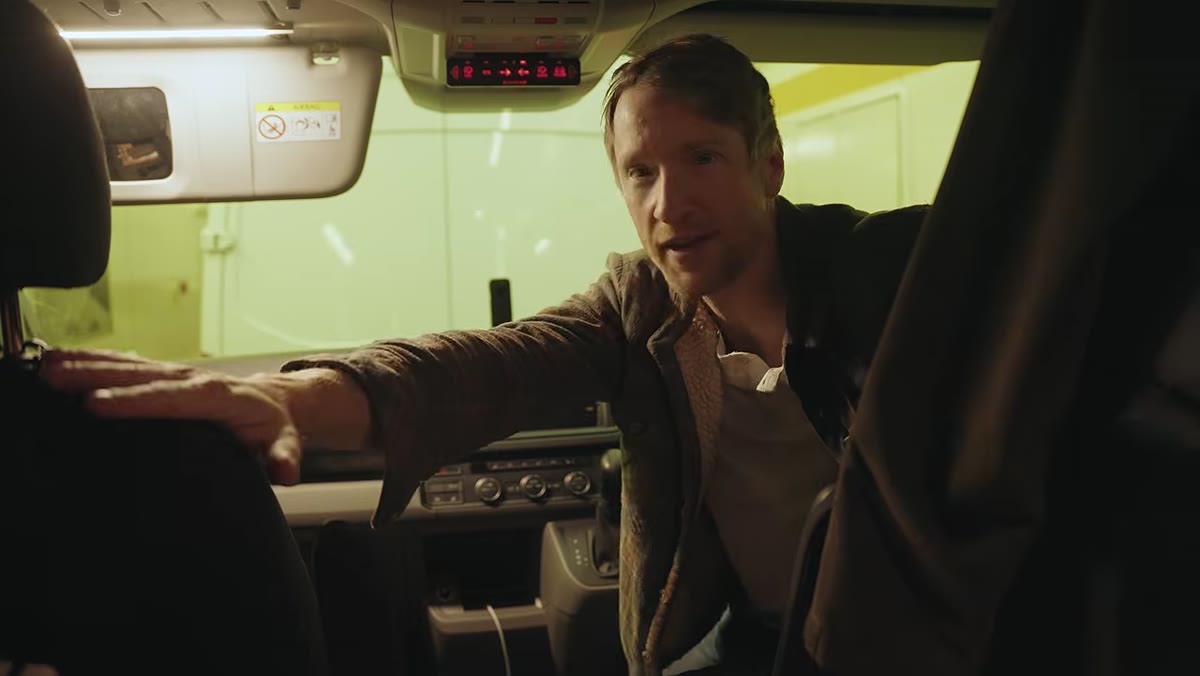
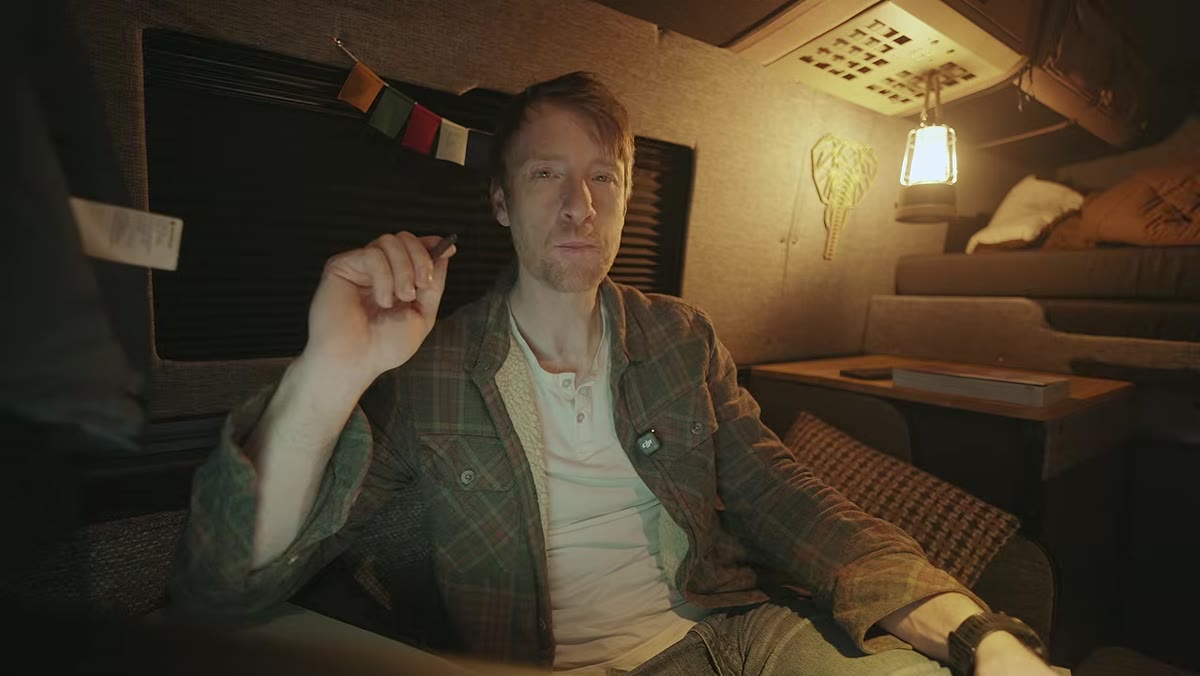
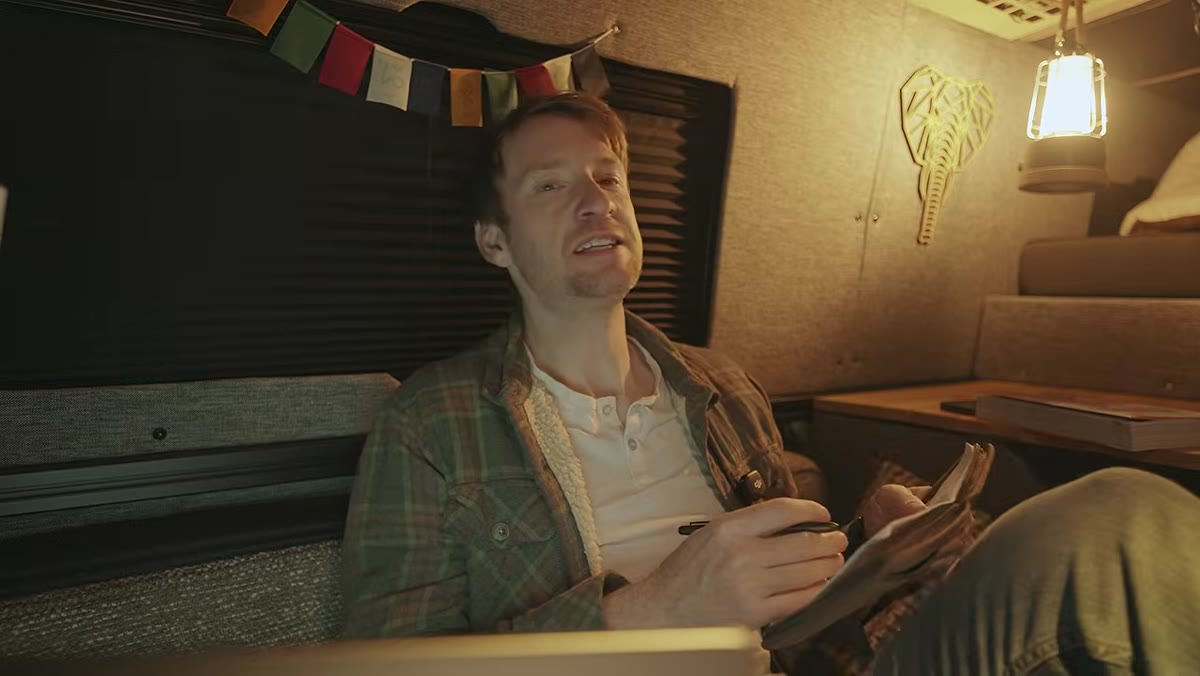 Heaton talking to camera inside the parked van at night
Here’s the part I found most useful, and the part most photographers won’t admit to needing. Heaton explains why this trip happened at all: he had a narrow window before a book launch, considered the usual suspects (Scotland, Ireland, the Outer Hebrides), and then had what he describes as a moment of clarity. He’d been telling himself for years that October in the Dolomites would be incredible. Every year: next year. And then he just booked it.
He didn’t have perfect conditions guaranteed. He didn’t have a hotel sorted. He had a window, a van, and enough self-awareness to recognize that “perfect timing” was just procrastination wearing a sensible hat. The spontaneous trip isn’t chaotic – it’s a reset that forces genuine engagement with a location instead of over-managing expectations.
What I’d Add From My Own Experience
I’ll be honest: I’m more of a Photoshop guy than a landscape shooter. But the planning logic Heaton uses maps directly onto how I approach composite work. I used to over-research stock assets before starting a comp – bookmarking hundreds of images, building elaborate mood boards, generally doing everything except opening a new document. Then a friend watched me do this for about 20 minutes and said “just start and fix it.” Annoying advice. Completely correct.
The Heaton approach – commit, research in transit, use specialist resources first, map your effort honestly, and treat a spontaneous decision as momentum rather than recklessness – works whether you’re driving to Italy or starting a new project file. The “someday” trap is real in every creative discipline. The exit is always the same: book the tunnel, pack the van, figure out the details while you’re moving.
One practical add for photographers actually planning something like this: build a two-layer location list. Layer one is your non-negotiables, the spots you’ve researched enough to know you’ll regret missing. Layer two is flex locations you can swap in or out based on weather and energy. Heaton doesn’t spell this out explicitly, but his guidebook-plus-internet approach is exactly how you build it.
The single biggest takeaway from this video isn’t a camera setting or a composition trick. It’s that the photographers who consistently get great landscape shots are the ones who actually show up. Preparation matters, but it should serve momentum, not replace it. Stop letting “someday” be the answer.
Watch the full tutorial on YouTube and follow the whole journey from a motorway petrol station in England to the Italian Dolomites.
Comments (4)
Printing this out and pinning it next to my monitor. That good.
Tried this technique this morning. Game changer for real.
Quality content like this is rare. Keep it up.
Really solid breakdown. This pairs perfectly with the workflows work I've been writing about.
Leave a Comment