I’m primarily a Photoshop and design guy, but I shoot enough to know that the moment before you need a filter is never the moment you want to be fishing around a bag hoping nothing cracked. Landscape photography filters are genuinely fragile. We’re talking glass, minimal protection, and a lifestyle that involves hauling gear up muddy hillsides, through airports, and occasionally across streams you probably shouldn’t have crossed. Most camera gear is built to take a beating. Filters are absolutely not.
Watch the full tutorial on YouTube
In this Mark Denney tutorial, he walks through his filter carrying setup in detail after viewers kept asking about the pouch appearing in the background of his landscape videos. The solution he landed on is the Mind Shift Gear Filter Hive, and after watching him break it down, the reasoning is pretty hard to argue with. If you use both circular and rectangular filters, this thing was basically designed to solve your exact problem.
Step 1: Understand Why Dedicated Filter Storage Actually Matters
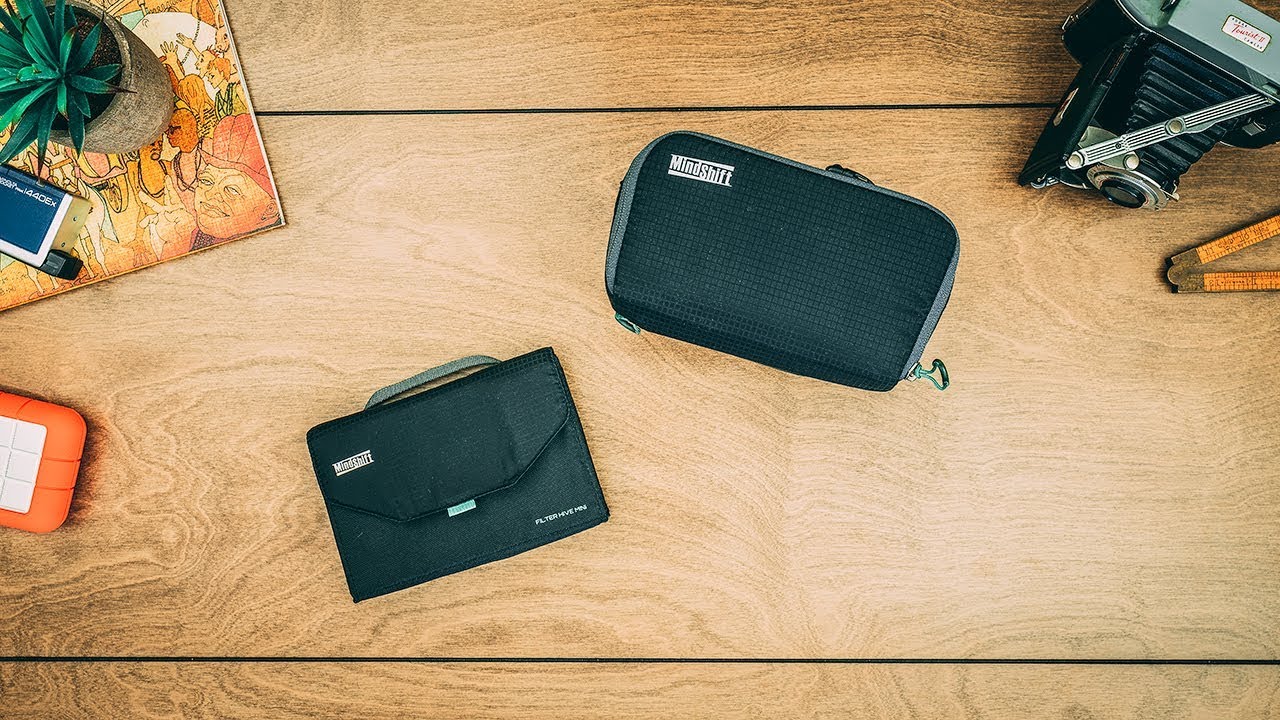
 Landscape filter bags and cases spread out on a desk
Filters are as fragile as camera accessories get. No foam cage, no thick rubber bumper, nothing. Mark points out early that most filter cases only handle one style of filter, either circular or rectangular, not both. That means you end up carrying multiple cases or sacrificing one filter type entirely. If you’ve ever wrapped a filter in a lens cloth and shoved it in a pocket while hoping for the best, you already understand the problem this tutorial is solving.
The circular filter bags Mark used early on worked fine for circular filters, but left rectangular filters totally unaccounted for. The branded box cases that come with Nisi filter kits hold rectangulars but are bulky, heavy, and again, don’t hold circular filters. Neither option works well when you’re using both.
Step 2: Identify the Mind Shift Gear Filter Hive as the Solution
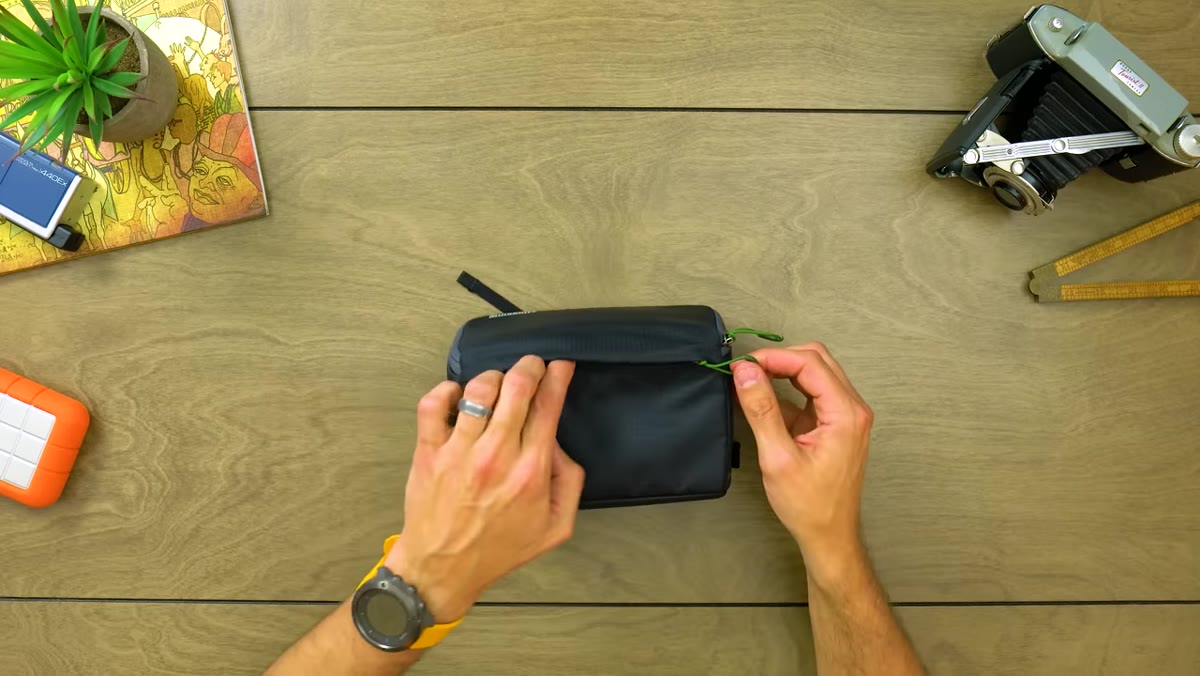
 Mind Shift Gear Filter Hive pouch on a desk, closed
The Filter Hive is Mark’s current carry solution and has been for a couple of years. It’s made from ripstop nylon with a padded exterior shell, so it has real structural protection rather than just a soft sleeve. The zippers are YKK, which matters more than it sounds because cheap zipper failures are a genuinely annoying way to ruin a trip. Mind Shift uses the same half-moon zipper pulls across their whole line, which are easy to grab with gloves on and easy to find in the dark. Small detail, real benefit.
This isn’t a sponsored segment dressed up as a review. Mark is describing something he actually uses and that viewers kept noticing in his other videos. That authenticity is worth something when you’re evaluating whether gear is worth buying.
Step 3: Explore the External Pocket
 Front zipper pocket open on the Filter Hive
The Filter Hive has a zippered front pocket that sits flat against the body of the case. It’s not huge, but it’s enough for a lens cloth, a cleaning pen, or any small accessories you want fast access to without opening the main compartment. Mark keeps that kind of thing in there, and honestly it’s the kind of thoughtful detail that separates gear designed by photographers from gear designed by people who have never been in a field.
Keeping your lens cloth separate from your filters also means you’re not accidentally dragging grit across your glass every time you dig around inside.
Step 4: Learn the Dust Flap on the Main Compartment
 Velcro dust flap partially folded over the open top of the Filter Hive
When you open the top of the main compartment, there’s a velcro dust flap built into the lid. The idea is simple: when you’re on location and there’s wind blowing dust, sand, or any airborne debris around, you can fold this flap over the open compartment to keep junk off your filters while you work. It’s a small thing that becomes a big thing the first time you’re on a windy ridge and realize your unprotected filters are sitting open.
The flap attaches with velcro and stays out of the way when you don’t need it. This kind of practical field design is easy to overlook in a spec sheet but impossible to ignore when you’re actually using the gear.
Step 5: Use the Accordion-Style Interior and Color-Coded Tabs
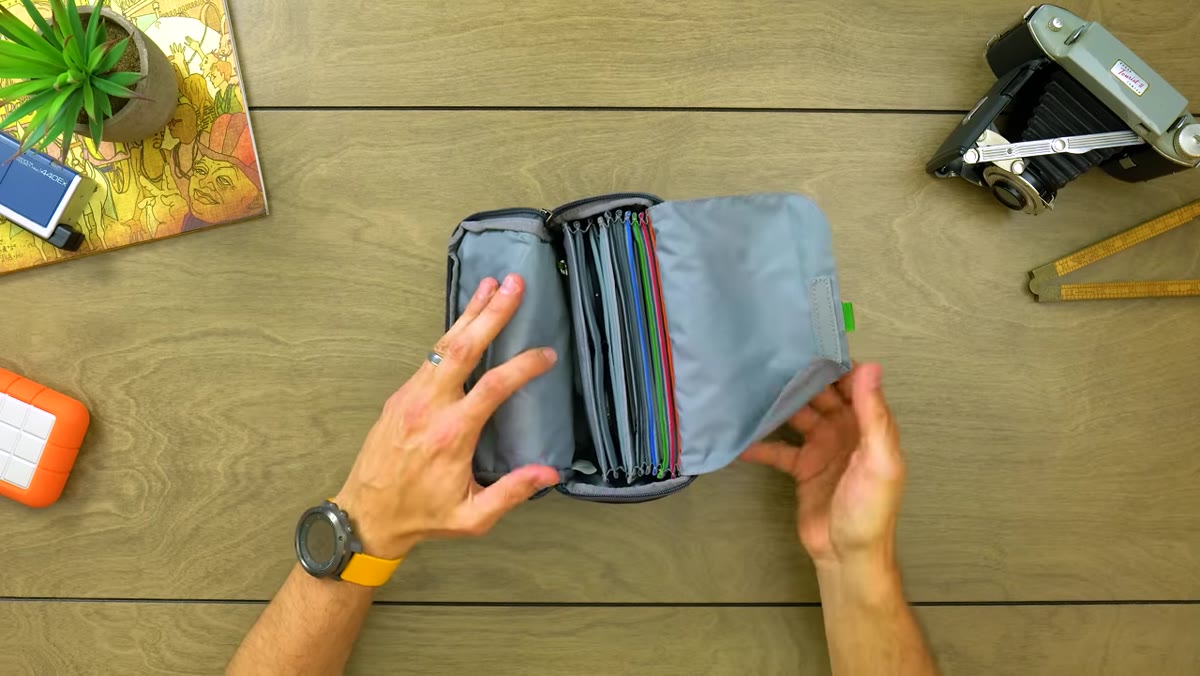
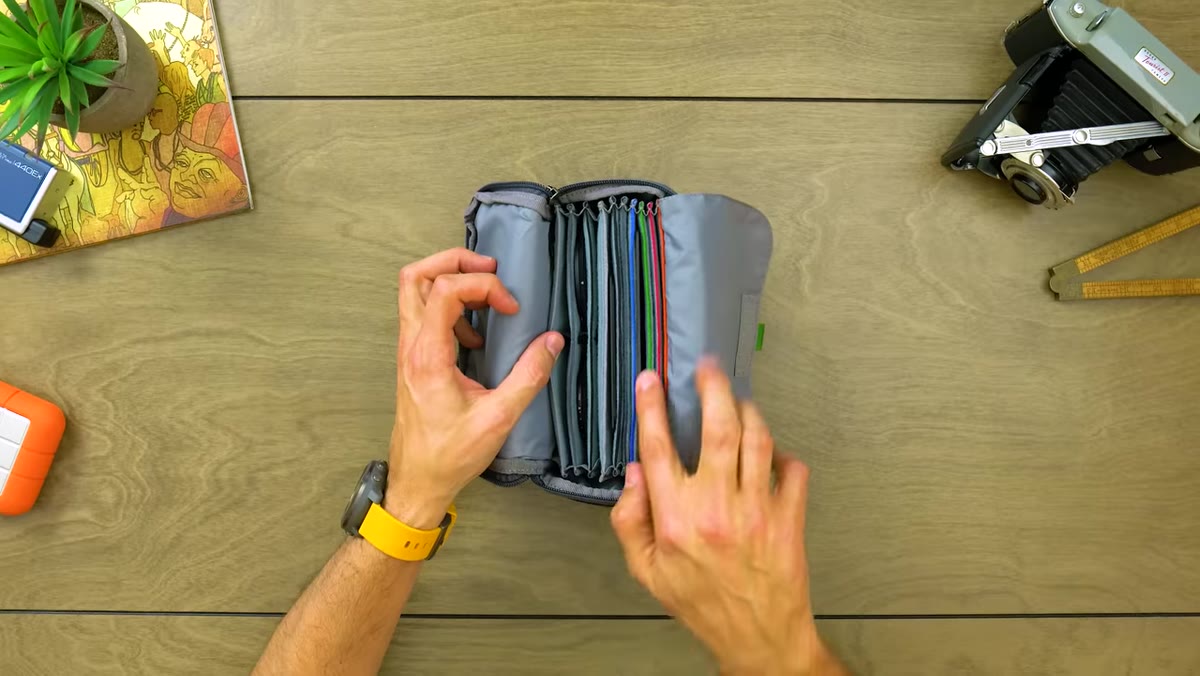 Interior accordion slots with color-coded tabs visible from above
Inside the main compartment, the Filter Hive uses an accordion-style divider system. Each slot holds one filter, and the tabs at the top are color-coded so you can build your own organizational system. Mark notes this is optional but useful if you want to quickly identify filter types without pulling each one out. ND filters in one color zone, graduated NDs in another. It takes a minute to set up once and saves time every shoot after that.
The accordion design keeps filters separated so they can’t rattle against each other in transit. That’s the core protection mechanism here, and it works.
Step 6: Confirm the Filter Hive Holds Both Rectangular and Circular Filters
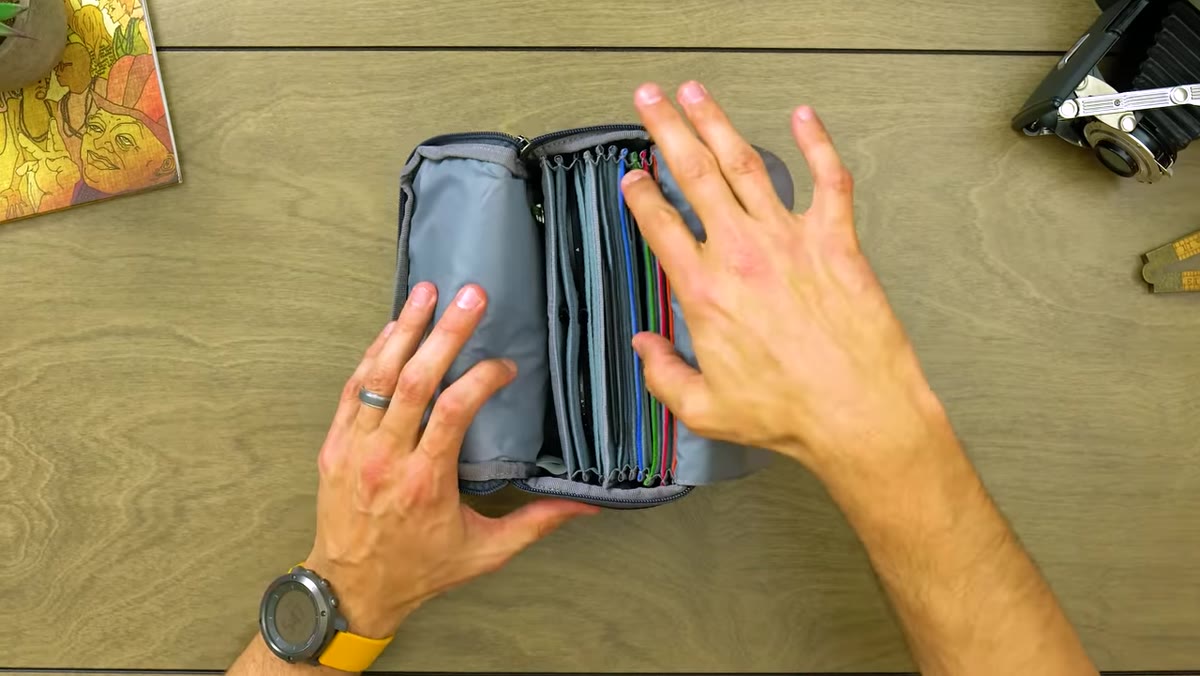 Filter Hive holding square and circular filters simultaneously
This is the actual headline feature. The main accordion section holds up to six square or rectangular filters, including the larger 150x100mm rectangular style used by systems like Nisi. The front section of the case handles circular filters separately, holding up to six of those as well. That’s a combined carry solution in one padded, organized pouch rather than two or three separate cases.
For anyone running a hybrid filter system, which is a lot of landscape photographers, this solves a genuinely annoying logistical problem in one clean package.
A Note From Someone Who Mostly Lives in Photoshop
I spend most of my working hours in Photoshop rather than behind a lens, but I do enough shooting to have opinions about gear organization. The Filter Hive appeals to me for the same reason a well-organized layer panel appeals to me: everything has a place, nothing is guessing, and you can find what you need without stopping your workflow to dig around.
The lesson underneath Mark’s tutorial is really about protecting your tools so your creative process doesn’t get interrupted by preventable accidents. Whether that’s backing up a PSD before experimenting or keeping your glass from bouncing loose in a backpack, the principle is identical. Protect the work, protect the tools.
The single biggest takeaway here is that carrying both circular and rectangular filters doesn’t have to mean carrying two separate cases and hoping neither one fails you. The Mind Shift Gear Filter Hive handles both in one compact, well-built pouch that was clearly designed by someone who actually uses filters in the field. If you’re sorting out your filter carry setup, this is the video to watch first.
Watch the full tutorial on YouTube
Comments
Leave a Comment