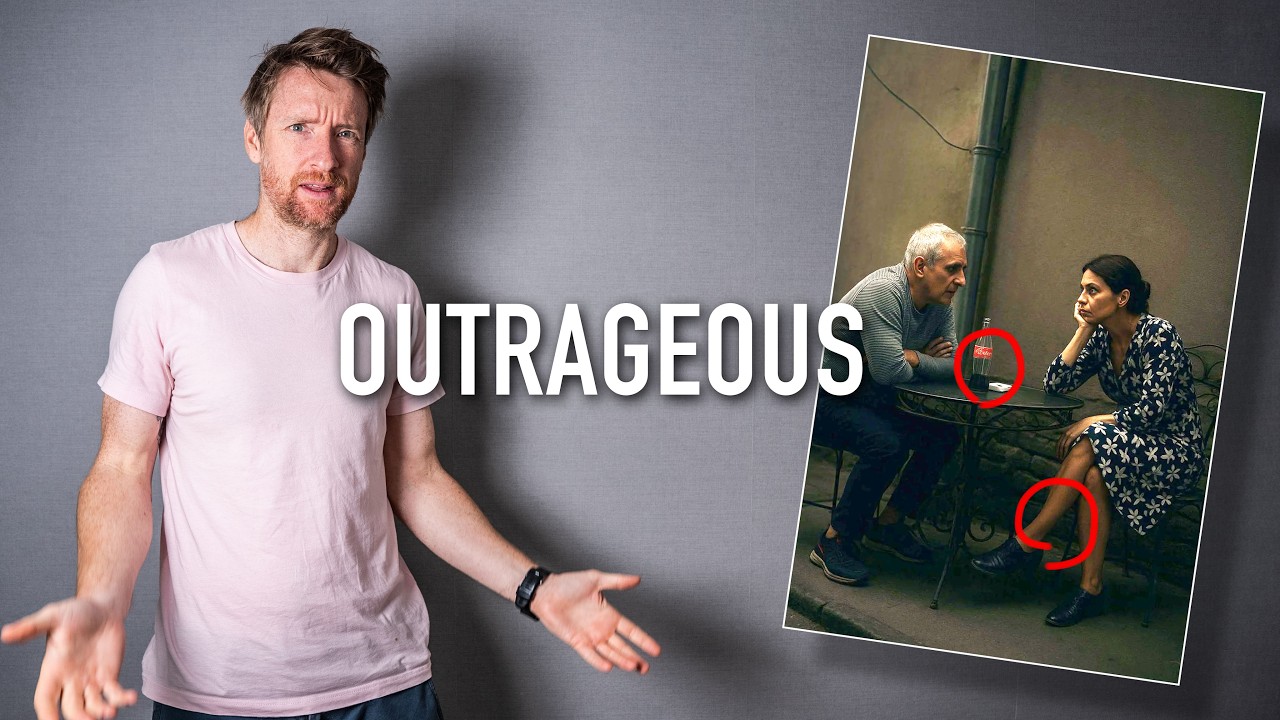
There’s a specific kind of embarrassment reserved for photographers who get caught cheating in major competitions. Not the quiet shame of a bad edit — I mean the full public disqualification, your name attached to a scandal, the whole thing. I’ve been thinking about it a lot lately because, honestly, it keeps happening. And the more I pay attention to it, the more I realize it reveals something worth talking about: what we’ve quietly stopped caring about in the age of AI-assisted everything.
Watch the full tutorial on YouTube
In this Thomas Heaton video, he works through a string of recent photo competition scandals involving AI-generated and heavily composited images, then anchors the whole thing with stories pulled from a vintage 1990s photography ethics book he found in a secondhand shop. The contrast is what makes it land. The technology has changed completely. The behavior hasn’t moved an inch.
This isn’t a technical Photoshop walkthrough with sliders and layer masks. It’s more useful than that in some ways. It’s a gut-check on the culture around image manipulation, which matters if you’re doing any kind of compositing work professionally. Knowing where the line is, and why it exists, is part of the job. Here’s how Heaton builds the argument.
Step 1: Establish the Pattern With Historical Examples
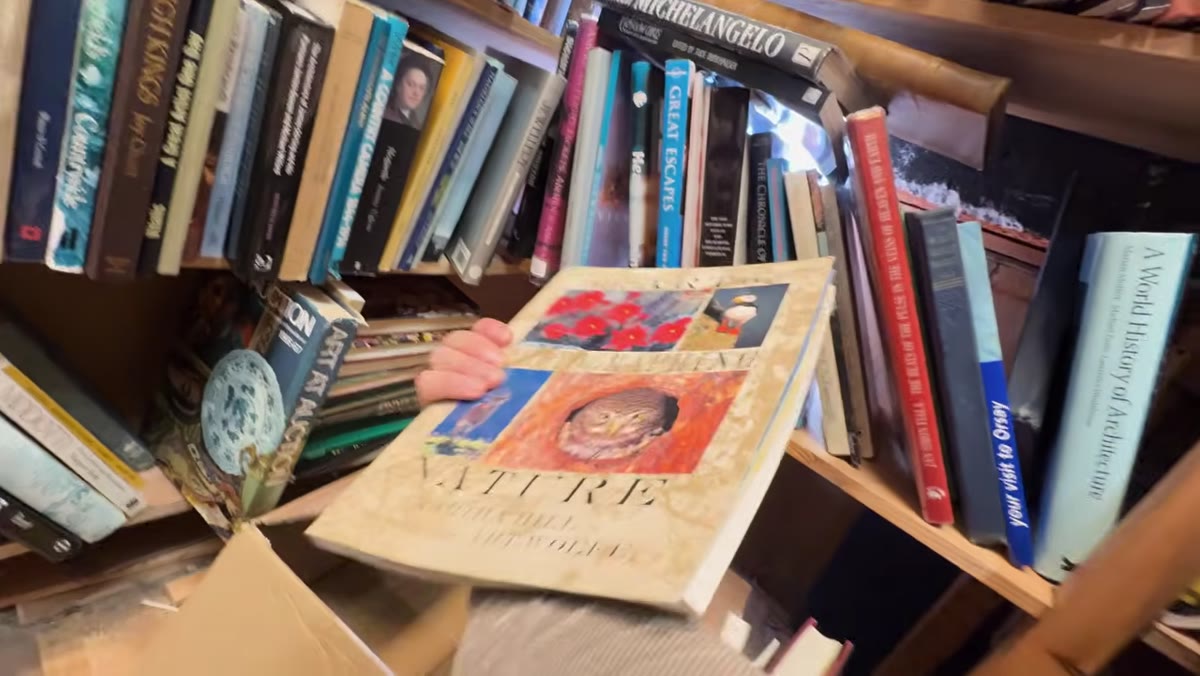 Book open to Ethical Considerations chapter on camera
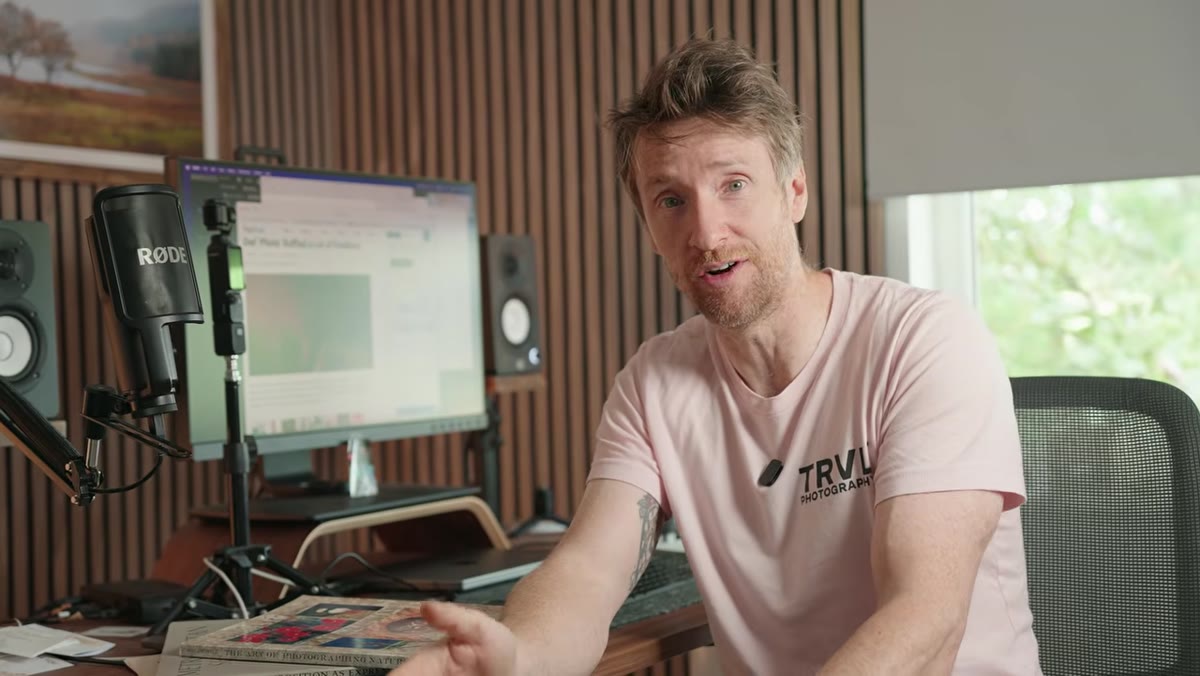
Heaton opens with a 1990s book called “The Art of Photographing Nature” by Martha Hill and Art Wolfe. He flips to a chapter on ethical considerations and reads out stories that are genuinely funny in a grimly familiar way. One photographer ran out of mice while baiting an owl for a wildlife shot, so he bought a gerbil from a pet shop instead. A reader later noticed the gerbil in the published image. Another photographer staged a bobcat-versus-wolverine standoff by renting both animals. A third submitted “wild” panda photos that turned out to be captive animals.
Book open to Ethical Considerations chapter on camera
Heaton opens with a 1990s book called “The Art of Photographing Nature” by Martha Hill and Art Wolfe. He flips to a chapter on ethical considerations and reads out stories that are genuinely funny in a grimly familiar way. One photographer ran out of mice while baiting an owl for a wildlife shot, so he bought a gerbil from a pet shop instead. A reader later noticed the gerbil in the published image. Another photographer staged a bobcat-versus-wolverine standoff by renting both animals. A third submitted “wild” panda photos that turned out to be captive animals.
The point Heaton is making here isn’t that people are bad. It’s that the temptation to manufacture the perfect shot is baked into competitive photography. It predates AI by decades. Once you see it that way, the modern scandals stop being surprising and start being predictable.
Step 2: Introduce the Modern Competition Scandals
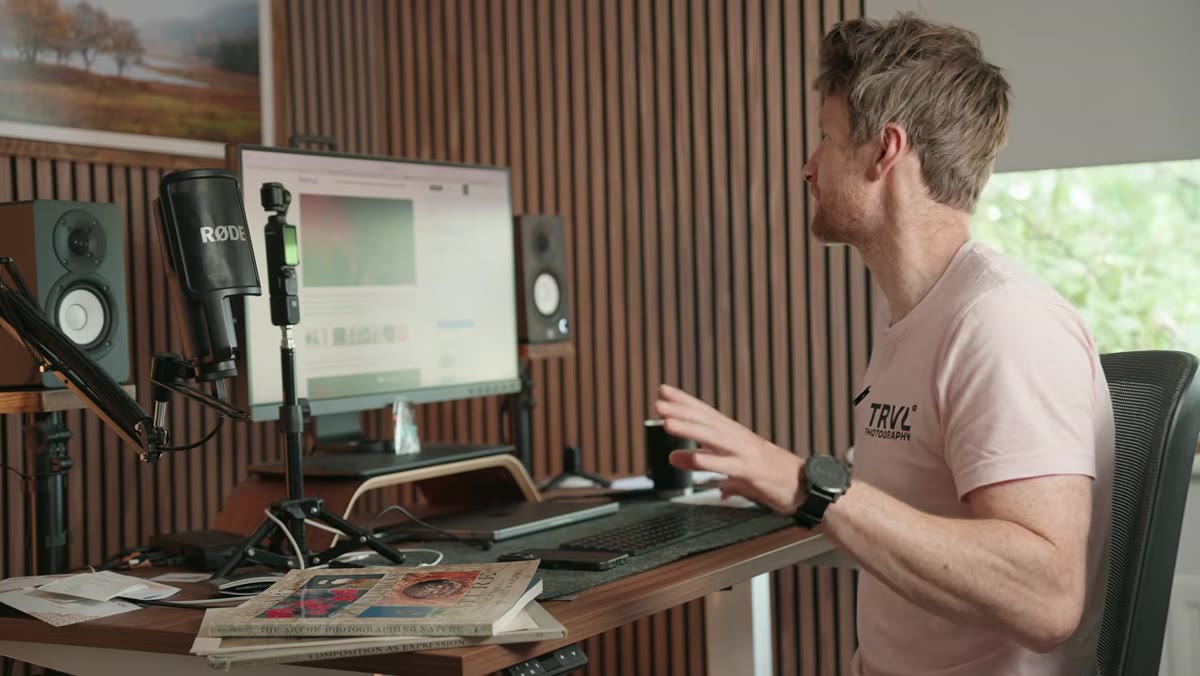 Heaton reading from article on screen about disqualified wildlife photo
Heaton walks through three recent cases, all from 2026, all with links in the description. The National Wildlife Federation’s Garden for Wildlife Photo Contest disqualified their own winner after it emerged the image was AI-generated. And crucially, neither the photographer nor the judges caught it during the judging process. That detail matters more than the disqualification itself.
Heaton reading from article on screen about disqualified wildlife photo
Heaton walks through three recent cases, all from 2026, all with links in the description. The National Wildlife Federation’s Garden for Wildlife Photo Contest disqualified their own winner after it emerged the image was AI-generated. And crucially, neither the photographer nor the judges caught it during the judging process. That detail matters more than the disqualification itself.
The second case involves Tokina pulling a contest winner after Reddit users flagged it as AI-generated. The third is an AI-generated image that made it through the Hasselblad Masters competition before being disqualified. These aren’t fringe contests. These are competitions with real prestige and real career implications, which is exactly why people are willing to risk submitting work that isn’t entirely theirs.
Step 3: Examine Why the Judges Missed It
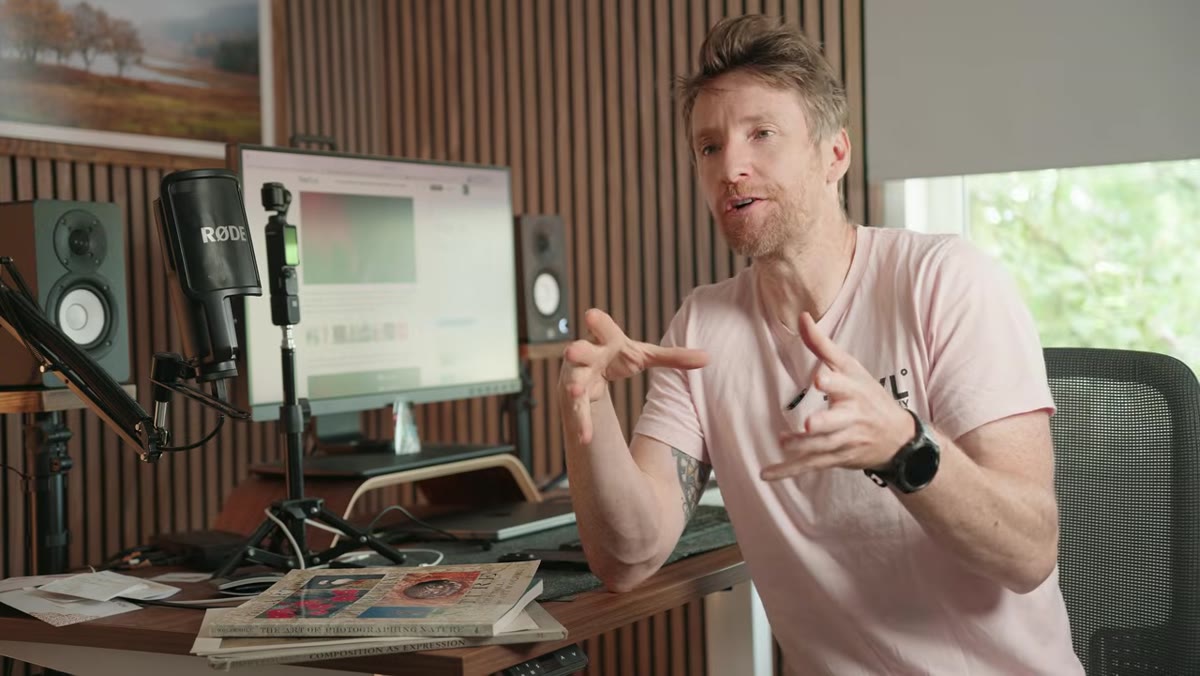 Heaton reacting to the disqualified owl competition image on screen
This is the part of Heaton’s breakdown that I find most useful from a practical standpoint. He spends time on the fact that judges, people who work with photography professionally, missed AI artifacts that Reddit users spotted almost immediately. His take is that crowd scrutiny works differently than panel judging. A panel is looking for beauty, technical excellence, narrative. A crowd is actively looking for the seam.
Heaton reacting to the disqualified owl competition image on screen
This is the part of Heaton’s breakdown that I find most useful from a practical standpoint. He spends time on the fact that judges, people who work with photography professionally, missed AI artifacts that Reddit users spotted almost immediately. His take is that crowd scrutiny works differently than panel judging. A panel is looking for beauty, technical excellence, narrative. A crowd is actively looking for the seam.
If you’re doing compositing work, this is worth sitting with. The question isn’t whether your composite looks convincing at first glance. It’s whether it holds up when someone is specifically trying to find the problem. Those are two completely different standards, and most of the time we’re only testing for the first one.
Step 4: Understand the Specific Red Flags That Got These Images Caught
 Close-up of the owl competition image showing the anomalous elements
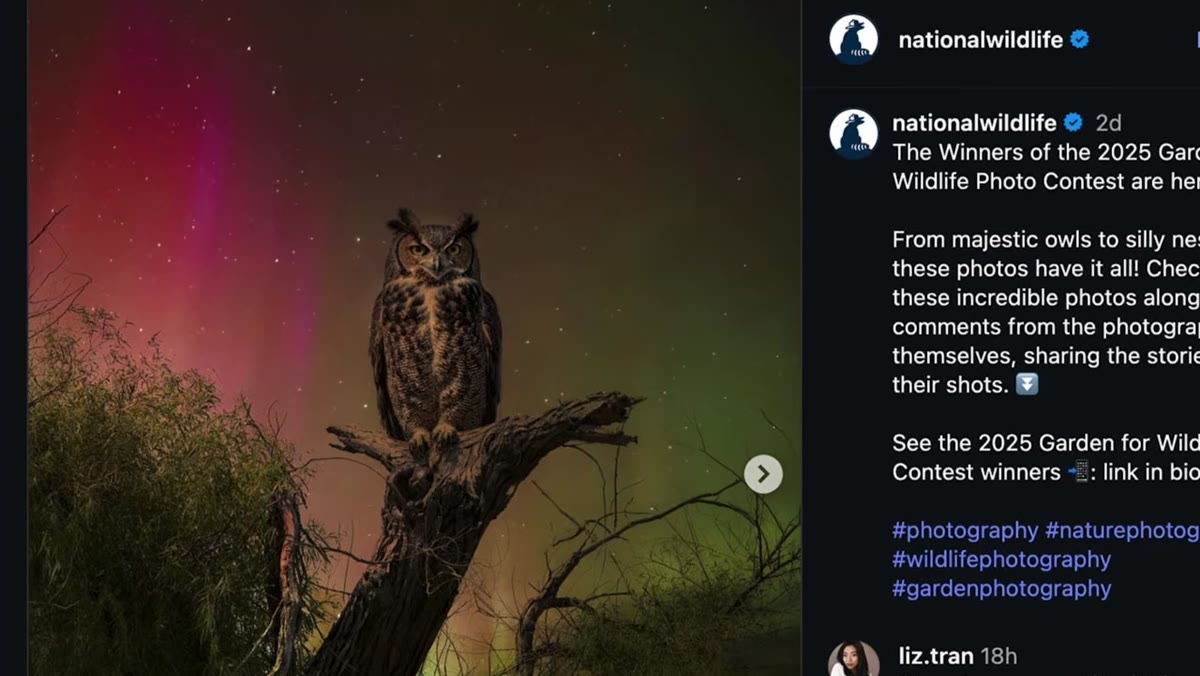
Heaton references the owl image in particular, which won a competition before being scrutinized and pulled. The issues flagged by commenters included unnatural feather rendering, lighting inconsistencies, and background elements that didn’t hold up to zoomed-in inspection. These are the same artifacts that show up in AI-generated images and in rushed composites: perfect in the center, wrong at the edges.
Close-up of the owl competition image showing the anomalous elements
Heaton references the owl image in particular, which won a competition before being scrutinized and pulled. The issues flagged by commenters included unnatural feather rendering, lighting inconsistencies, and background elements that didn’t hold up to zoomed-in inspection. These are the same artifacts that show up in AI-generated images and in rushed composites: perfect in the center, wrong at the edges.
For anyone doing composite work in Photoshop, this is a useful checklist by inversion. Check your edge light consistency. Check whether your background depth makes physical sense. Check the fine detail on organic subjects like feathers, fur, or hair, because that’s where generation models and quick masking both fall apart. The center of the image is easy. The periphery is where the work lives.
Step 5: Connect It Back to What Photography Is Actually Testing
 Heaton holding vintage photography books in the bookshop
The through-line in Heaton’s video is a question he keeps circling: what have we collectively forgotten about photography now that the tools can rescue almost any shot? His answer, drawn from the vintage books and the competition scandals together, is that photography at a competitive level is supposed to test your ability to be in the right place, with the right knowledge, at the right moment. The image is evidence of that.
Heaton holding vintage photography books in the bookshop
The through-line in Heaton’s video is a question he keeps circling: what have we collectively forgotten about photography now that the tools can rescue almost any shot? His answer, drawn from the vintage books and the competition scandals together, is that photography at a competitive level is supposed to test your ability to be in the right place, with the right knowledge, at the right moment. The image is evidence of that.
When you substitute AI generation or deceptive compositing for the actual experience, you’re not just breaking a competition rule. You’re hollowing out the thing that makes the image meaningful. That might sound philosophical, but it has practical implications for anyone selling prints, entering competitions, or building a reputation on their work.
My Take: Where This Gets Complicated for Composite Artists
Here’s where I’ll push back slightly on the implied binary. There’s a real difference between submitting a fully AI-generated image to a wildlife photography competition and doing legitimate composite work transparently. Compositing has been part of photography and advertising for as long as darkrooms have existed. The ethical issue isn’t manipulation. It’s misrepresentation.
I’ve done plenty of composites for commercial clients where the goal was clearly a constructed image and everyone involved knew that. That’s not cheating. What gets people in trouble is entering constructed work into categories that require authentic capture, or worse, presenting fabricated natural history as documentary evidence. If the rules say “single unmanipulated exposure” and you submit a five-layer composite, that’s not a gray area. Know what category you’re entering. Know what the rules actually require. And if you’re doing work that involves heavy manipulation, be upfront about it. The photographers who got caught weren’t brought down by their editing skills. They were brought down by the gap between what they claimed and what they actually did.
The biggest takeaway from Heaton’s video is simple but uncomfortable: the technology has made deception easier and detection faster at the same time. Crowds on Reddit will find the seam in your composite faster than any panel of judges. The photographers who keep winning competitions in the long run are the ones who actually went outside, waited for the light, and made the image for real.
Watch the full Thomas Heaton video on YouTube - the bit where he reads the gerbil story out loud is worth it on its own.
Comments (2)
I keep coming back to this article. It's that useful.
I tried this on a client project yesterday and the results were way better than expected.
Leave a Comment