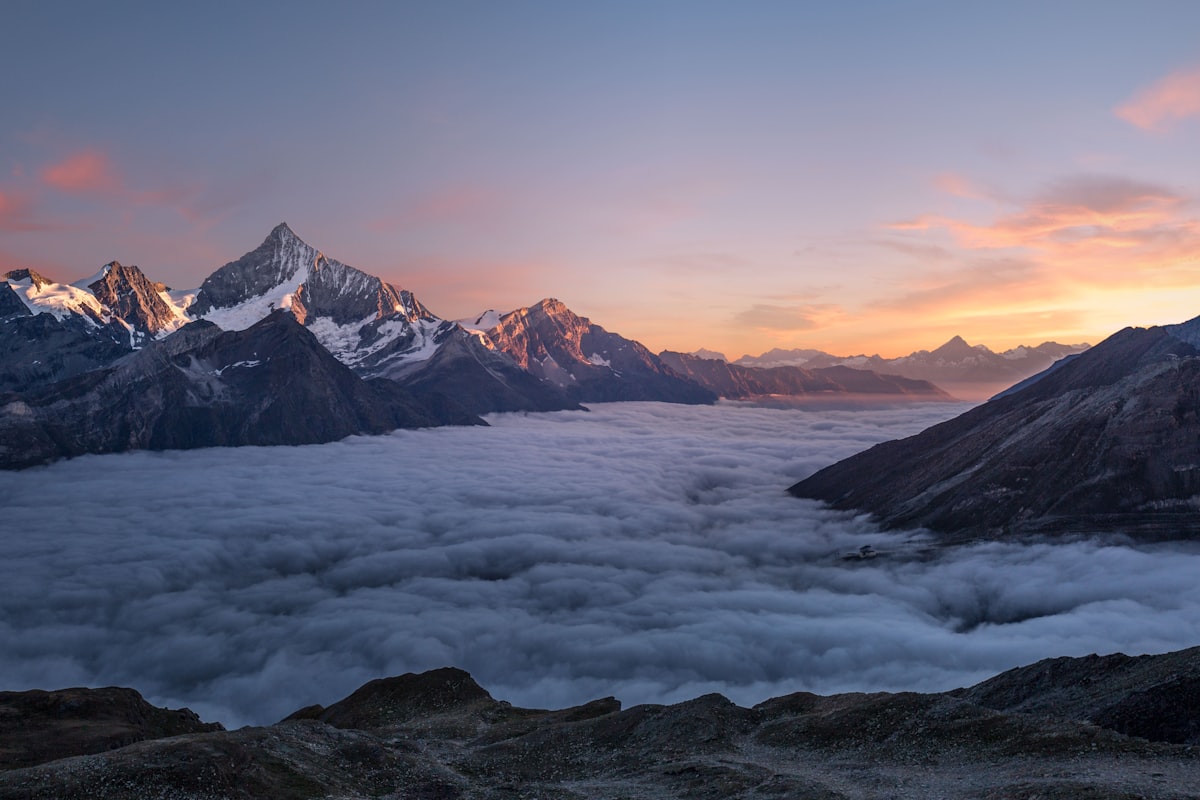
Photoshop’s panorama stitching has gotten remarkably good over the years, but it still requires some understanding of what it’s doing — and what can go wrong — to get consistently great results.
Shooting for the Stitch
The quality of your panorama is mostly determined before you open Photoshop.
Overlap by 30-40%. Each frame should share about a third of its content with the next frame. Less overlap gives the stitching algorithm less data to work with, resulting in visible seams or failed merges.
Keep your exposure consistent. Lock your exposure on the first frame and keep it there. If autoexposure adjusts between frames, you’ll get visible brightness bands in the final image.
Use a longer focal length. Wide-angle lenses introduce heavy distortion at the edges of each frame, making stitching harder. A 35-50mm lens on full frame produces cleaner panoramas than a 16mm lens.
Rotate around the nodal point. This is the optical center of your lens, not the camera body. For casual panoramas, rotating around the tripod mount is fine. For critical work, a panoramic head that rotates around the nodal point eliminates parallax errors.
The Stitching Process
- Go to File > Automate > Photomerge
- Click Browse and select all your panorama frames
- Choose a layout method:
- Auto works well for most situations
- Cylindrical is best for wide panoramas (more than 120 degrees)
- Spherical for very wide or multi-row panoramas
- Perspective for architectural subjects with strong straight lines
- Check “Blend Images Together” — this handles exposure matching at seams
- Check “Content Aware Fill Transparent Areas” if you want Photoshop to fill the irregular edges
- Click OK and wait
Fixing Common Problems
Visible seams: These usually happen when exposure varied between frames. Select the seam area with a feathered selection, add a Curves adjustment layer, and match the brightness of the two sides.
Ghosting from moving subjects: If a person or car moved between frames, you’ll see a transparent ghost at the overlap. Pick the layer that has the complete version of the subject, and paint white on its layer mask to give it priority in that area.
Warped horizons: Cylindrical and spherical projections can curve the horizon. Use Edit > Transform > Warp to straighten it, or use Adaptive Wide Angle (Filter > Adaptive Wide Angle) for more precise control.
Soft edges: The edges of each frame are often softer due to lens falloff. After stitching, check sharpness across the full panorama at 100% zoom. If certain areas are softer, apply gentle sharpening with a masked Unsharp Mask layer.
The Crop Decision
After stitching, you’ll have irregular transparent edges. You have three options:
- Crop tight. The safest option. You’ll lose some of the image but the edges will be clean.
- Content-Aware Fill. Select the transparent areas and fill. This works well for sky and simple backgrounds but fails on complex areas.
- Manual patching. Clone stamp and healing brush to fill small transparent gaps. This takes time but preserves the most image area.
Resolution and File Size
Panoramas create very large files. A five-frame panorama from a 45-megapixel camera produces an image around 150-200 megapixels. This is fantastic for prints but can choke Photoshop on machines with limited RAM.
If you’re struggling with performance, consider stitching in Lightroom first (Photo > Photo Merge > Panorama). Lightroom generates a DNG file that’s easier to work with, and you can always open it in Photoshop later for detailed editing.
My Workflow
I shoot panoramas in raw, stitch in Photoshop, flatten to a single layer, then do all my editing. Trying to edit individual frames before stitching creates more problems than it solves because adjustments need to match perfectly across frames. Stitch first, edit the unified image second.